The Denver Asia Center has long served as more than just a physical space on campus at the University of Denver. For many Asian American students, it functions as a cultural anchor, a place of familiarity, and a point of connection to heritage, identity, and community. In moments of uncertainty, it becomes a reminder of belonging within a broader university environment.
Recent discussions surrounding the Asia Center created concern across both campus and the surrounding community. However, the center is no longer at immediate risk, as earlier plans for reconstruction or removal have been withdrawn. Despite this, the long-term future of the space remains uncertain, leaving students and business owners still reflecting on its importance and stability.
This slideshow is about the Hall Council’s annual “Puppy Petting Pen” event hosted on campus, and I wanted to show the actual event itself juxtaposed against the planning of the event talked about over the voiceover. It is almost a narrative arc that pans from the collective atmosphere of the event, showcasing how students engaged with the event in such a positive way, to lots of pictures of the puppies interacting with the people themselves. By adding in an interview with Shelby Crowe, the President of the Hall Council, the story is a lot more holistic and tells the viewer just how much effort and time goes into planning an event, and how much it can mean for the people putting it on. Crowe was very happy to talk about the event via an interview while it was happening.
I chose to photograph the event from a variety of perspectives to provide a total look at the environment (in wider shots that establish the setting and close-ups that show the joy on people’s faces). The slides are ordered roughly to transition from the general scene to the specific; this starting with a wide shot of multiple people to establish the large crowd, then narrowing down through the interactive shots like the puppies play-fighting and the people interacting with the puppies through the pen fence, and ends with settling on the quiet moments like the puppies sitting on people’s shoulders/laps. My chosen pacing allows the viewer to be drawn into the event as a whole, the “big picture,” before finding the individual experiences of students within it. I experimented with video in this audio slideshow as well because I wanted to capture how crazy the experience was within the pen for anyone who did not go. Unfortunately, I was not allowed to bring my tripod into the pen due to safety concerns with the puppies, but I opted to bring just my camera in for a more casual video shot. Regarding audio and text, I integrated Shelby Crowe’s interview to act as the narrative’s backbone and I tried to match the photos to what she was saying when I could. As mentioned, I wanted the audio to feel like a behind-the-scenes look into how the people made the event as special as it was, and to tell students that they too could be involved with curating special college memories like that.
This TikTok shows what the University of Denver campus looks like during June. While the weather is beautiful, flowers are blooming, and the campus is at its greenest, finals week brings a different reality for students. The video highlights the contrast between a thriving campus and stressed students.
I was inspired to create this video because I noticed how beautiful DU’s campus looks during June. The flowers are blooming, the trees are green, and the weather is warm, but at the same time students are dealing with finals week and end-of-quarter stress. I wanted to capture that contrast in a short and relatable way. To create the video, I filmed different areas of campus and edited the clips together using TikTok’s editing tools. My favorite part of the process was finding shots that matched the captions. I enjoyed turning an everyday college experience into something entertaining and creative.
On a campus with a student population of 12,800, how do DU students find their place in a community? Three students at the University of Denver discuss how they’ve found their own circles in various ways demonstrating how community can truly be found anywhere in any way.
Student Across Class Years Share Their Freshman Year Advice
By Isabella Cary and Sophie Hamill
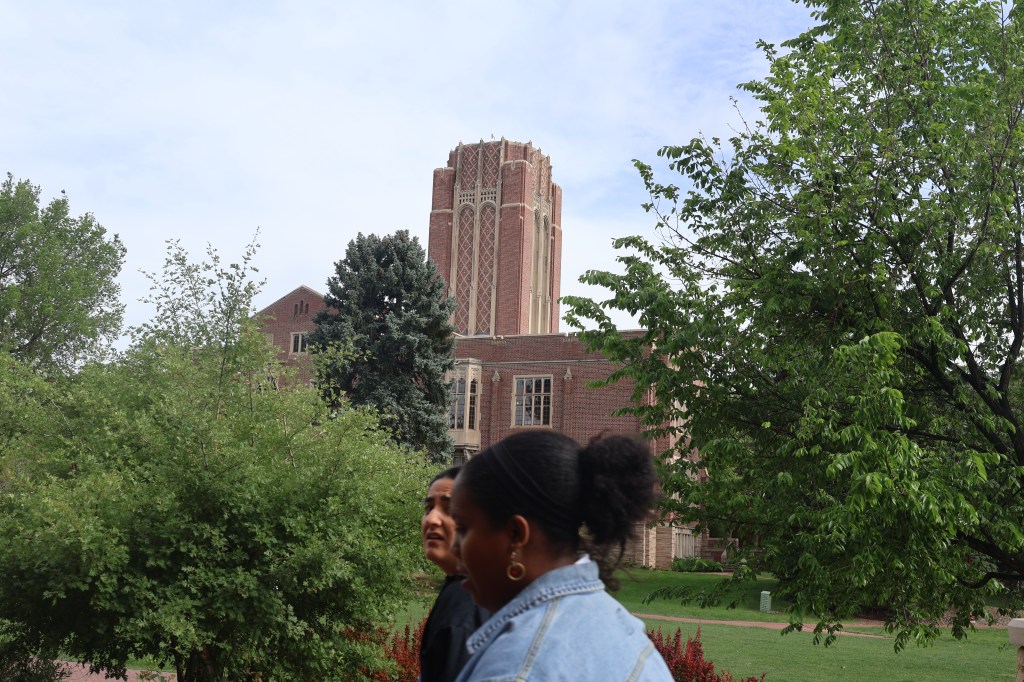
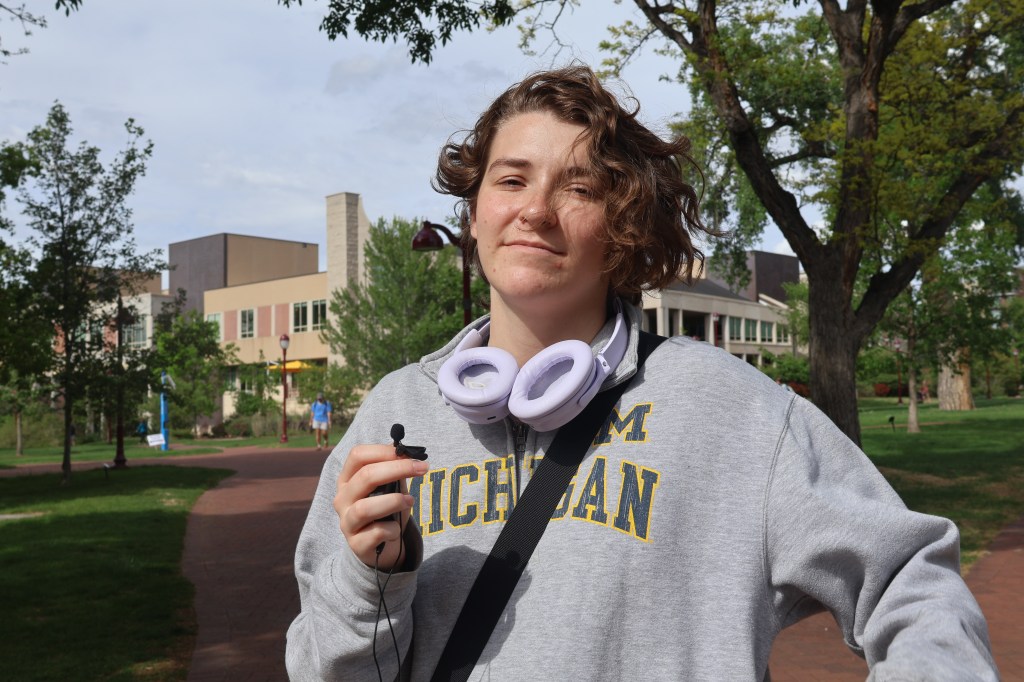
Two friends walk past Mary Reid Hall, located near the center of campus.Sophomore Charlotte Janney stands in front of the library while walking back to her dorm from a hangout with friends.
Hindsight is 20/20. If you could go back to your first day of college, what would be the first thing you would tell yourself with the knowledge you possess now?
To find out how perspectives change throughout our years in college, we interviewed one student from each grade level, freshman, sophomore, junior, and senior, and asked them for their advice to themselves and to others.
While each student’s experience was different, several common themes emerged. Students repeatedly pointed to the importance of getting involved, building meaningful relationships, and staying true to yourself while adjusting to college life.
One of the intersecting points of agreement was the value of taking advantage of opportunities early on. Freshman Ryan Jenks said she would encourage both herself and incoming freshmen to become more involved as soon as they can.
“I would definitely give myself the advice to really expand on clubs here and really choose more interests,” Jenks said. “And try to meet more people.”
The slideshow shows the experience of traveling to Red Rocks with friends for a night of house music featuring Cloonee. Rather than only focusing on the concert itself, the story follows the full progression of the night, including the drive up to Boulder beforehand, getting ready with friends, taking the party bus to the venue, and experiencing the atmosphere at Red Rocks. The photos and clips aim to show both the excitement of live music culture and the social experience that surrounds concerts for many college students.
I chose these photos and videos because they helped create a sense of movement throughout the story and reflected the atmosphere of the night. I organized the slideshow chronologically so viewers could experience the buildup naturally, starting with preparation and travel before reaching the concert itself. I used audio from an interview to make the slideshow feel more personal and immersive, while the music and text helped connect different parts of the story together. One thing I learned from the process was how important pacing is in a slideshow, especially when matching visuals with audio and music transitions. If I were to do another project like this, I would try to gather even more close-up and crowd shots to create additional variety in the final edit.
For my slideshow project, I focused on downtown Denver because it is a place that is personally meaningful to me. The project explores the city through the perspectives of people who frequently spend time downtown and have strong connections to it. To build the slideshow, I conducted several interviews with Denver residents and visitors, asking them about their favorite places, memories and experiences in the city. After each interview, I visited the locations they mentioned and photographed them. Most of the photographs were taken using my Canon camera, although some locations required me to switch to my phone camera because of restrictions on professional photography equipment. By combining interviews with photographs of the locations discussed, I wanted the slideshow to present a more personal and authentic view of downtown Denver while highlighting the atmosphere and culture of the city.
The slides were arranged in the same order that the locations and stories appeared during the interviews. I chose this structure because it allowed the slideshow to feel natural and conversational, almost as if the viewer were experiencing the city alongside the interview subjects. Audio clips from the interviews were included so viewers could hear people describe their experiences in their own words, which added personality and emotion to the project. Text was also added throughout the slideshow to provide context and help guide viewers through the narrative. Integrating the photographs, audio and text was more difficult than I originally expected because I encountered microphone issues that affected some of the recordings. I also faced problems with the weather because heavy rain prevented me from returning downtown to reshoot some images I was unhappy with.
Overall, the project taught me a great deal about photography, audio recording and visual storytelling. The interviews were one of the strongest parts of the slideshow because they helped create a stronger emotional connection between the audience and the locations being shown. I also learned the importance of preparing for technical issues and unpredictable weather conditions when working on outdoor projects. If I were to complete this project again, I would bring backup audio equipment, spend more time checking sound quality before interviews and schedule additional days for photography in case weather conditions changed. I selected the photographs that best represented the stories and emotions shared by the interview subjects while leaving out images that felt repetitive or did not contribute to the overall narrative. In the end, the slideshow became more than a collection of photographs. It became a reflection of the people, memories and experiences that shape downtown Denver.
I organized the slides in the same order that the locations and stories naturally came up during the interviews because I wanted the audience to experience the project almost like a conversation or a guided tour through the city. Instead of forcing the images into a different sequence, I felt keeping the original order helped preserve the honesty and spontaneity of the interviews. I also integrated audio clips from the interviews so viewers could hear people speaking about these places in their own voices, which added emotion and realism to the slideshow. In addition, I included text throughout the video to help provide context for each location and guide the audience through the narrative. The process of combining photographs, audio, and text was more difficult than I initially expected because I ran into technical problems with the microphone recordings, and some audio needed additional editing in order to sound clear. I also faced challenges with the weather because when I planned to return downtown to reshoot certain images, heavy rain made it difficult to capture the footage I originally envisioned.
Overall, the process taught me a lot about photography, audio recording, and storytelling through multimedia. One thing that worked well was the interview aspect because it gave the slideshow a stronger emotional connection and made the project feel more genuine than if I had simply photographed random locations. I also think the variety of images helped show different sides of downtown Denver, from popular public areas to smaller locations that held personal meaning for the people I interviewed. However, I learned that planning around audio quality and weather conditions is extremely important, especially for projects filmed outdoors. If I were to do this project again, I would bring backup audio equipment, spend more time testing microphone levels before recording interviews, and plan additional days for photography in case weather conditions changed unexpectedly. I carefully chose the photos that best represented the stories and emotions shared during the interviews, while excluding photos that felt repetitive, poorly lit, or disconnected from the overall theme of the project. In the end, the slideshow became not only a visual exploration of downtown Denver, but also a reflection of the people and experiences that give the city its identity.
The topic I chose to highlight in my audio-photo slideshow is the Pearl Street Farmers market. As a student here at the University of Denver, the Sunday market has become one of my favorite parts of student life here, and I wanted to see what impact it had on other students’ experience at DU. Through the photos I took and chose to use in this slideshow, I wanted to capture everything the market has to offer DU students, as well as what students’ thoughts were on how it impacted the community here and what they thought could improve it.