As final exams approach at the University of Denver and West Virginia, many students find themselves facing one of the most stressful periods of the academic year. Long study sessions, multiple deadlines, and the pressure to perform well can quickly become overwhelming. While students have always developed their own strategies for coping with academic stress, a growing number are turning to artificial intelligence tools to help manage their workload and reduce anxiety.
Our opening monologue began with a long shot of Colin Regan beginning to discuss the outline of this story. There is a slow and intentional zoom in to add intrigue to the plot, and the close-up shot is to establish the frame of the story and the characters involved. During finals week, the signs of stress are visible across campus. Laptops remain open for hours as assignments and exam preparation take priority. We supported this idea with a close-up over-the-shoulder shot of a student using Grammarly to help write a thesis statement.
University of Denver students Alex Dorra and Cooper Kilpatrick shared their experiences with academic stress and the role that AI plays in their daily routines. Their perspectives reveal both the benefits and limitations of emerging technology in higher education.
One student explained that “AI has become a useful tool for organizing information and creating outlines.” Cooper Kilpatrick. This drove home the idea that too much work and stress lead students to seek AI help, and the shot was framed with the subject in the middle, using a medium shot.
Students Alex and Ethan describe finals week as “busy” and “rambunctious,” with a somewhat devious smile attached. Medium shots were used in the dorm rooms to establish the singular thoughts that students have, summoning up the final week. Students shared with us that by reducing some of the initial stress associated with beginning an assignment, students can focus more energy on understanding the material and less on managing uncertainty.
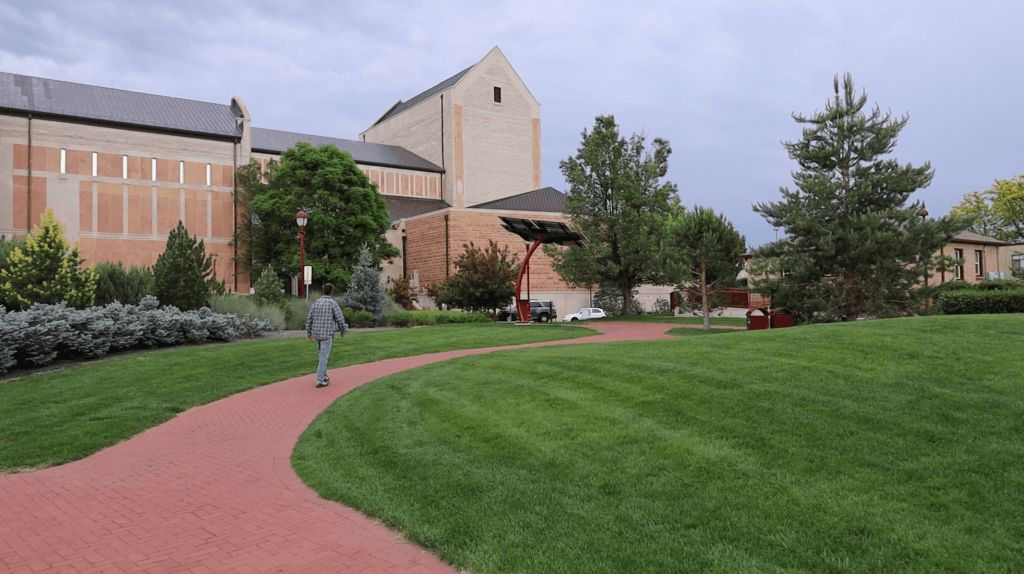
At the same time, students emphasized that AI is not a complete solution to academic pressure. There is a close-up establishing shot that informs students of ways and places to “block out the noise” on the University of Denver’s campus. Interviewed students, Cooper and Alex, noted that while AI can be helpful, it cannot replace critical thinking, personal responsibility, or genuine engagement with coursework.
Beyond technology, students continue to rely on traditional methods of stress relief. We used a medium shot of Colin outside near the pond, doing schoolwork to transition from the University of Denver to the University of West Virginia. Taking breaks, spending time outdoors, exercising, and “connecting with friends remain important strategies for maintaining balance during demanding academic periods” West Virginia student Ethan
Hannick explains. These activities provide opportunities to step away from coursework and recharge mentally before returning to study sessions.
The story also highlights how campus environments can contribute to stress management. Even brief moments away from screens and textbooks can help students regain focus and perspective. This was a point that University of West Virginia student Ethan Hannick drove home.
As artificial intelligence becomes increasingly integrated into education, its role in student life continues to evolve. This thought was established with an over-the-shoulder shot of a student using AI to help with their workload and voice-over.
The experiences shared by students suggest that the future of learning will likely involve a combination of human effort and technological assistance. Our closing shot was framing a busy parking lot with stress noise, but peaceful birds chirping to tie together finals stress week, but also peace in completing finals week.
Ultimately, the students interviewed agree on one important point: technology can provide support, but success still depends on the individual.