For college students life often revolves around the same two central places: where they live and where they go to class. But many students also rely on “third spaces,” or places outside of home and school where they can relax, study, socialize and feel connected to others.
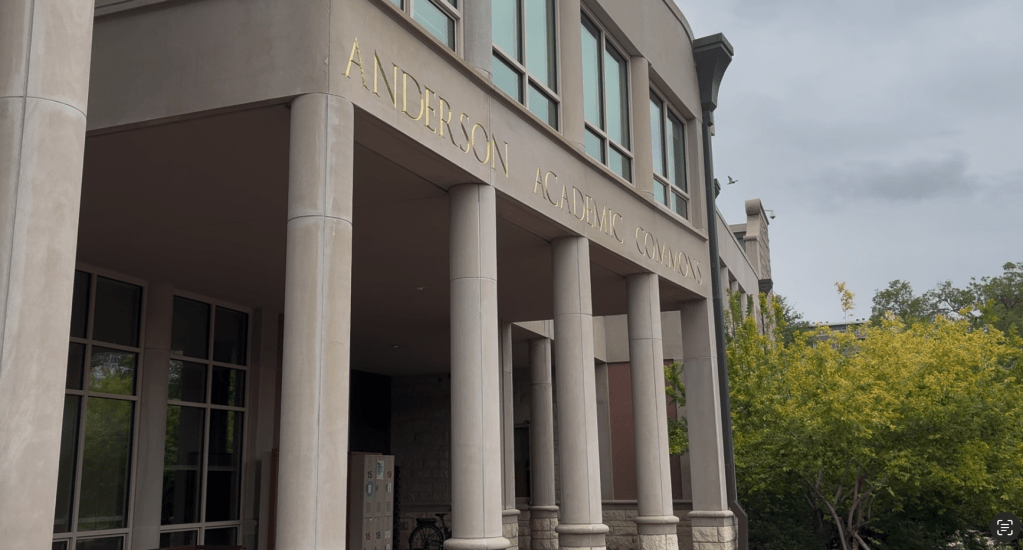
At The University of Denver there are a variety of third spaces across campus, including coffee shops, residence hall lounges, dining areas, libraries, outdoor spaces and student organization offices. These spaces can play an important role in helping students build community, especially on a campus where students have busy schedules and may not always have time to meet people in formal settings. These spaces can also be good for upperclassmen who no longer live on campus.
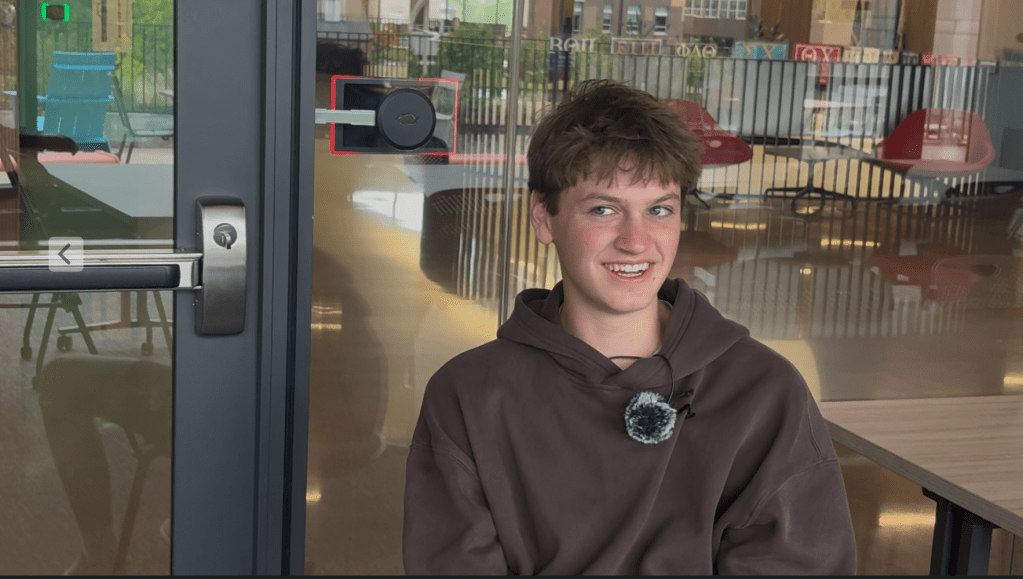
For this story, we spoke with three DU students about where they spend time outside of class and their dorms, and why those places matter to their college experience. Students described third spaces as important not only for studying, but also for relaxing, seeing friends and feeling like they belong on campus.
Linnea Cervenka, a third year at DU, said that her favorite third space is the library. For Cervenka, the library provides a productive environment away from the distractions of everyday dorm life. She said the space allows her to focus on schoolwork while still being surrounded by other students.
“The library gives me a place to work where my roommates aren’t distracting me,” Cervenka said.
Other students emphasized how these spaces were a place for them to meet people and hang out with their friends. Andrew Ballenger, a first year at DU, emphasized how the Community Commons is a great place for students to socialize and build connections. As one of the most heavily used buildings on campus, the Community Commons brings together students from different residence halls, majors and organizations, creating opportunities for both planned and spontaneous interactions. Ballenger said the space allows him to spend time with friends while also meeting new people and feeling more connected to the campus.
While students highlighted different reasons for using third spaces, a common theme was the sense of connection they provided. For some students, that sense of community extends beyond traditional campus spaces and into student organizations and residential communities.
Nadine Frank, a second year at DU, said that the common areas in her sorority house serve as her primary third space. Unlike spaces that are primarily used for studying or passing time between classes, she said the sorority house provides a place where she can relax, spend time with friends and build relationships with other members. The shared living spaces create opportunities for both planned gatherings and casual interactions, helping foster a strong sense of community outside the classroom.
As students continue to navigate college life, the spaces they choose can shape how connected they feel to their campus community. For many DU students, third spaces are more than just places to study or pass time between classes. They are where friendships develop, routines form and campus begins to feel more like home.


Enjoyed the interviews being both on and off campus, made for a cool perspective. Nice work!
LikeLiked by 1 person
Great job standing in front of the camera. Nice job setting up the interview shots from different angles. Good supporting video that matches what the interviewee says. There are multiple long, medium, and close-up shots throughout the video. There is good continuity to the story. Nice opening shot and closing shot. This is a well put-together video.
LikeLiked by 1 person
Great job! I really like how your interviews show diverse backgrounds and I think they were put in a very logical order. I also think your b-roll strongly supports your narration. Nice work!
LikeLiked by 1 person
I think this is great! Your quotes were very great that you got out of the interviewees. Third spaces were something that I did not know all that much about, so this was absolutely a must for someone like me to watch. Super informative and I loved the backdrops for you interviews.
LikeLiked by 1 person
This is such an interesting topic to cover! I really enjoyed how you conducted your interviews and how you shot your b-roll. Great work!!
LikeLiked by 1 person